

On Tuesday, in Kyebi, in Ghana’s Eastern Region, we will commission a technology center that has the potential to connect an entire rural community of approximately 15,000 people to the global digital economy.
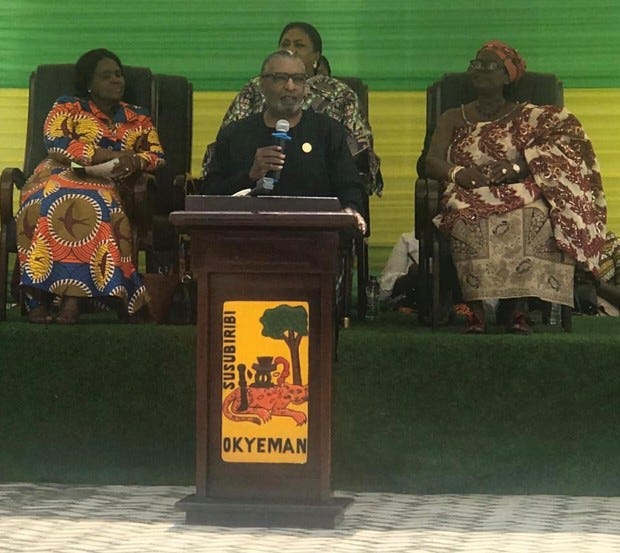
The center is a partnership between the DFREE Global Foundation and the Akyem Abuakwa Traditional Council, under the sponsorship of the Okyenhene (King), Osagyefuo Amoatia Ofori Panin II of Akyem Abuakwa. It is designed not as an outside project imposed on a local community, but as a partnership rooted in local leadership, cultural legitimacy, and a shared commitment to the future of young people.
Another important partner in this effort is the Partnership for Digital Access in Africa, a public-private alliance working to help connect one billion people in Africa to the internet by 2030. I serve on PDAA’s Board of Directors, and PDAA facilitated our connection with Starlink, making it possible for us to bring satellite internet service to this rural community.
That connection is particularly important in rural Ghana. Rather than waiting for conventional broadband infrastructure to reach communities like Kyebi, satellite technology allows us to leap over some of those infrastructure barriers. Young people do not have to wait for fiber lines, cable systems, or urban-style networks before they can participate in the digital economy. The technology exists to connect them now.
Access to the internet is no longer a luxury. It is economic infrastructure. A road connects a village to a market. An internet connection connects a young person to the world.
Around the world, we have seen what connectivity can do. India’s rise as a global technology-services hub, the Philippines’ leadership in call centers and business-process outsourcing, Ukraine’s resilient IT talent base, and China’s expansion of digital opportunity into rural communities all point to the same truth: access changes possibilities.
The Philippines is especially instructive. It became a global leader in call centers and business-process outsourcing by connecting English-speaking workers to companies that needed customer service, administrative support, and back-office operations. Ghana has a similar opportunity if its young people, including those in rural communities, are given reliable access, disciplined training, and pathways to global clients.
And this idea is not mine alone. Across Africa, call centers, technology hubs, and business-process outsourcing operations are already emerging as part of the continent’s economic future. Kenya has become a growing destination for outsourced customer service and back-office support, and Ghana already has call-center and technology operations, particularly in Accra. Kyebi is not an isolated experiment. It is part of a larger movement. The question is whether rural communities will be included in that movement or left watching from the margins.
The technology center will build on educational work already underway at the same complex, where we previously established a community library. The potential reach of the new center is considerably larger. It will be open to the entire Kyebi community of approximately 15,000 people, while our programming is designed to serve approximately 1,000 elementary, middle, and high school students each week, along with approximately 100 college students and teacher trainees per week.
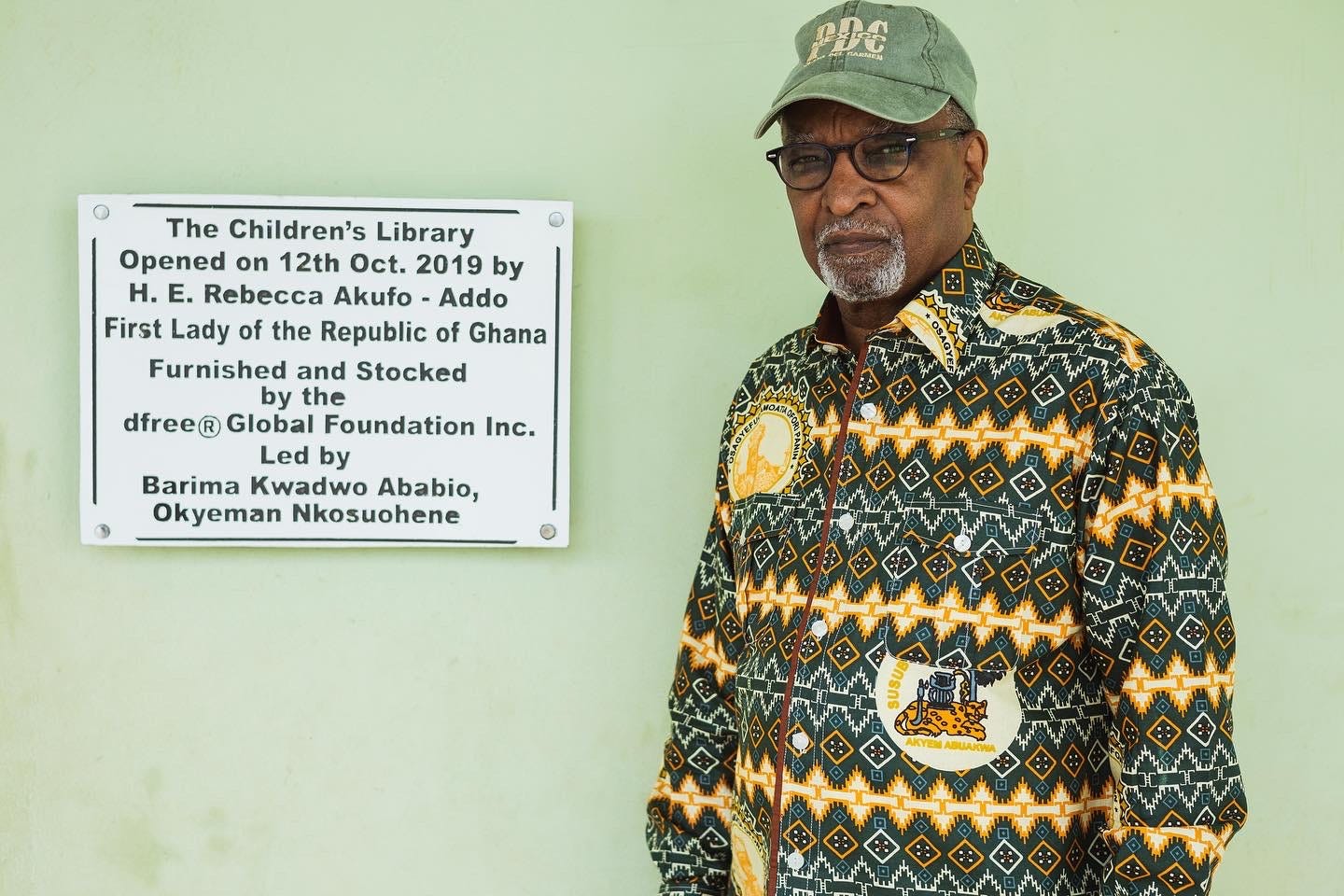
These numbers help explain why this project is about much more than providing Wi-Fi. We are creating a community technology resource - a place where students can study and receive tutoring, young adults can develop marketable digital skills, teachers can strengthen their technological capacity, and residents can gain access to opportunities that increasingly exist only online.
We will provide programming, tutoring, workshops, seminars, and training in the use of artificial intelligence. Much of that instruction will be delivered remotely by professionals in the United States who can teach, mentor, and expose young people in Ghana to the tools and standards of the global digital economy.
That is the real engine of the project. Access opens the door, but training helps young people walk through it. Internet service may connect them to the world, but instruction, discipline, mentoring, and practice will help them compete in that world.
PDAA’s strategy recognizes precisely this challenge. Connectivity is only part of the equation. The organization focuses on expanding broadband access, improving device affordability, and enhancing digital skills. Its materials estimate that 230 million digital jobs will exist in Sub-Saharan Africa by 2030, many requiring intermediate to advanced digital skills. That is why our goal in Kyebi is not simply to help people use the internet. We want young people to be able to work through it.
I have seen this personally through my company, DFREE Digital LLC. We outsource important business tasks to young people in Ghana. They earn more than they would likely earn in many local jobs, while we pay less than we would pay for similar services in the United States.
That is not charity. That is partnership.
This distinction matters. Instead of sending occasional gifts or one-time donations, we can create ongoing work, income, and skills. A job creates dignity, routine, and a future. A handout, even when well-intentioned, often ends when the money or the program runs out.
For generations, many American churches and nonprofits have thought of Africa mainly through the language of foreign missions: collecting donations, sending old shoes and used clothing, and responding to need after need. There is nothing wrong with compassion, and there are moments when direct relief is necessary. But relief is not the same as development.
Instead of sending old shoes and used clothing, we can help create jobs. Instead of one-time relief, we can help build income and agency. That is a mission model that honors dignity and multiplies impact.
For African American businesses and institutions, this is a chance to align mission with method - to build capacity here while expanding economic opportunity there. That is a different model of foreign mission: less about relief, more about shared value; less about dependency, more about agency. And it can ripple for generations.
This opportunity should be especially compelling for African American-led organizations, churches, nonprofits, fraternities, sororities, and Black-owned small businesses. Many of our institutions operate with limited budgets and heavy workloads. They need administrative help, digital support, research, customer service, bookkeeping, design, communications, and social media capacity, but they often cannot afford large American staffing costs.
Rural Ghana offers a powerful and principled solution. By partnering with trained young people in Ghana, Black American organizations can reduce expenses, expand capacity, and participate directly in the economic development of Africa. This is not outsourcing as exploitation. Done properly, it is outsourcing as partnership, Pan-Africanism with practical results, and economic cooperation that benefits both sides of the Atlantic.
Ghana is especially well positioned for this opportunity. It is English-speaking, youthful, and entrepreneurial. With reliable internet, basic equipment, digital training, and mentorship, rural youth can serve clients, build businesses, and strengthen their communities.
Of course, internet access alone is not enough. It must be paired with training, discipline, supervision, reliable electricity, cybersecurity awareness, financial education, and a culture of excellence. Young people must learn not only how to get online, but how to work online. They must understand deadlines, customer expectations, confidentiality, communication, and the value of saving and investing their earnings.
But the first step is access.
The commissioning of this technology center is not the finish line. It is the beginning of a larger vision. We should imagine rural technology centers across Ghana and across Africa - places where young people gather not merely to browse the internet, but to build careers, serve clients, start businesses, and support their families.
We should imagine a Ghana where rural youth are not excluded from digital work because of where they were born. We should imagine Black American institutions discovering that Africa is not only a continent of consumers or causes, but a continent of partners, professionals, and problem solvers.
India did not become a global technology hub overnight. The Philippines did not become a global outsourcing leader by accident. Ukraine did not build an export-oriented IT sector without skill and discipline. China did not connect rural communities to digital commerce without intentional investment. In every case, access had to be created, skills had to be developed, and opportunity had to be connected to talent.
PDAA’s goal is to help connect one billion Africans to the internet by 2030. But a billion people are ultimately connected one community at a time. In Kyebi, we intend to demonstrate that connectivity can become much more than access to the internet. When combined with education, training, artificial intelligence, and pathways to employment, connectivity can become access to the global economy.
That is what we are trying to do in Kyebi.
This week, as we open the doors of this technology center, we are doing more than installing internet service. We are making a statement: rural Ghana belongs in the global economy. African youth deserve access to the same tools that have transformed lives in other parts of the world. And when opportunity reaches talent, they will not merely receive it. They will multiply it.
The future is already digital. The question is whether rural Africa will be invited to participate in it.
In Kyebi, we are answering yes.

Exemplary! This work is commendable and well-aligned with the beliefs, principles and all we hold as pillars of humanity and dignity. May God bless all involved in this effort. Congratulations on the newest commission! 👏🏽