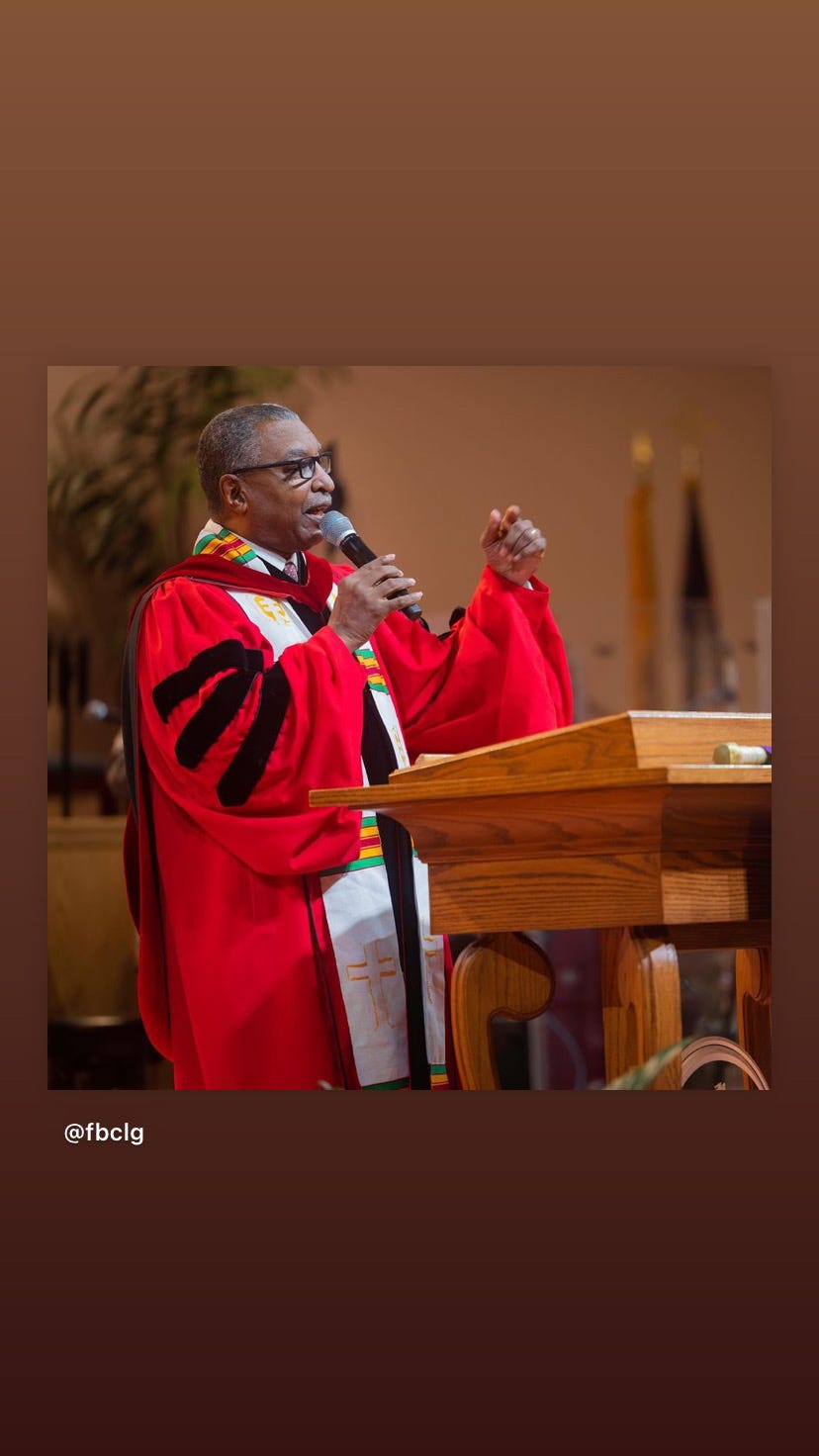
My Title Was Not My Identity
Titles inevitably change. Roles eventually end. But a person cannot depend entirely on a role to tell them who they are.
One of the questions people often ask me about retirement is whether I experienced emotional withdrawal after leaving the pastorate.
The honest answer is no.
I don’t say that casually, and I don’t say it critically of anyone who has struggled with the transition. I say it because, for many years, I made a conscious decision: I did not want my personal identity to be the same as my pastoral title.
Pastoring was a calling, but it was also my job.
I loved the ministry. I cared deeply about the congregation I served. I took the responsibility seriously. But I tried to remember that before I was a pastor, I was a person. My worth as a human being could not depend entirely on whether I was standing in a pulpit on Sunday morning.
That decision influenced my retirement planning and shaped my life after retirement more than I understood at the time.
I have seen how easily a role can become a mirror. When people constantly refer to you by a title, and when your schedule, relationships, and daily purpose are organized around one position, it is natural to begin seeing yourself only through that role. When the role ends, it can feel as though something inside you has disappeared with it.
I wanted to avoid that.
Even while serving as senior pastor, I intentionally lived a life that extended beyond the church. I served on corporate boards of directors. Those experiences taught me a great deal and introduced me to professional relationships very different from ministry. The compensation also supplemented my pastoral salary and provided another measure of financial stability.
I wrote books and eventually formed a charitable foundation to provide free copies to people who could not afford them. I began consulting with organizations on strategy and community engagement. I held two government positions, and I traveled widely for public speaking engagements.
None of these replaced my ministry. They complemented and extended it. They reminded me that I had gifts that functioned outside a single role.
So, when I retired from full-time pastoral ministry, I did not wake up to an empty calendar or an empty sense of purpose. I had other responsibilities, other relationships, and other meaningful work already in motion. What changed was not my usefulness. What changed was my assignment.
Looking back, I realize I was not only preparing financially for retirement. I was preparing personally.
I was trying, perhaps without naming it, to become a whole person who happened to be a pastor rather than a pastor who happened to be a person.
Titles inevitably change. Roles eventually end. But a person cannot depend entirely on a role to tell them who they are.
Retirement did not feel like losing myself.
It felt like discovering that the person God called was always larger than the position I held.
And that realization made stepping away from the title possible without stepping away from purpose.


Dr. Soaries thank you for sharing this. As a female founding pastor for 20 years I don’t believe I was ever able to separate my “I-ness” from being a pastor long enough before I was reminded by someone. I had a social justice ministry that kept me close to purpose but the day to caring for the needs of others and their families wore me down spiritually and financially. So, I retired last year and am building me. After 20 years of dedicated service I retired with no pension. But I’m working a financial plan and am not worried about.
Thank you for sharing this Dr. Soaries. It brought to light a bit of my own journey. After my son went off to college, I found myself on a new path. That of a caregiver. Did not “plan” for that. Once I interned mom Ina nursing home…well that’s when I started walking (nowhere in particular). I knew however, that whatever I did going forward had to be with purpose.