

I knew a lot of ministers before I ever became one. My community had prominent pastors, and my father had clergy friends who came through our house. I was comfortable around preachers as a boy. When I went to work for Rev. Jesse Jackson, one of the most famous Baptist ministers in the world, I met clergy from every corner of the country. Many of those relationships are still intact today. But those men were older than me. Most were my advisors and my mentors. They were not my peers.
That changed when I became an assistant pastor of a Baptist church. For the first time I had relationships with ministers who were at the same stage I was. When I became a senior pastor, that circle grew. I had colleagues now, not just elders.
Here is what has always struck me about my friendships in the ministry. The closest ones are with men and women who live and work outside my home state. I have a handful of clergy friends who are local. But most of the people I would call if something went wrong are a plane ride away.
For a season that was not entirely true. Some years ago four of us who pastored in the area had lunch together once a month. We talked about our churches and our families and our frustrations. It was good. Then two of the four moved to other states. One has since died. The lunches simply stopped.
There were times when I felt like I was missing something. I would see groups of pastors who have close ties. They travel together. They vacation together. They show up at each other’s anniversaries and revivals, and they seem to enjoy a kind of fellowship I did not have. I would watch that and wonder. I wondered whether there was something about me that made other local pastors keep their distance. Was I too busy? Was I too private? Did my work outside the church make me look like someone who did not need them?
The honest answer is simpler than I wanted it to be. I have never been a social person. I was never a party person. We did not entertain at home, and I did not go looking for a crowd. Some men are built for the cookout and the golf outing and the long evening in somebody’s backyard. I am not one of them. I have always known that about myself and becoming a pastor didn’t change that.
So I accepted that I was not going to be part of a clergy group that socialized together. That was not going to be my story. What was my story was a set of friends and colleagues scattered across the country with whom I speak regularly and spend time with whenever we can manage it. Those relationships are real. They have held up over decades. Distance did not weaken them. In some ways it protected them, because none of us had to compete for the same members or the same influence in the same city.
The most meaningful fellowship I ever had with other clergy came during my doctoral work. My personal and doctoral mentor was Dr. Samuel D. Proctor, and the cohort of pastors around him was something I have never found anywhere else. We were all carrying full-time churches while trying to read and write and think at a level we had not been asked to reach since seminary. We suffered together. We encouraged each other when one of us was ready to quit. We argued about theology and compared notes on deacons. Those years of mutual endeavor created a comradery I have never been able to duplicate, and I value it to this day. There is something about doing hard work alongside people that produces a bond no monthly lunch can match.
I still wonder sometimes if I should have done more. Should I have extended myself to the pastors down the road? Should I have picked up the phone more often, or accepted more invitations, or made a few of my own? Probably. Most of us could say that about something. Friendship takes initiative, and I was not always the one who took it.
But I have reached a conclusion that I am at peace with. The few genuine friendships I have had in the ministry were enough. A pastor does not need a crowd of colleagues. A pastor needs a few people who will tell him the truth, pray for him when he cannot pray for himself, and not repeat what he shares in confidence. I had that. I still have that. Some of those people are in other states, and one of them is in the cemetery, but I had it.
I think about the men and women coming up in ministry now who may be feeling what I felt, watching the groups that seem so close and wondering why they are not in one. I would tell them what took me years to learn. The number does not matter. What matters is whether the ones you have are real.
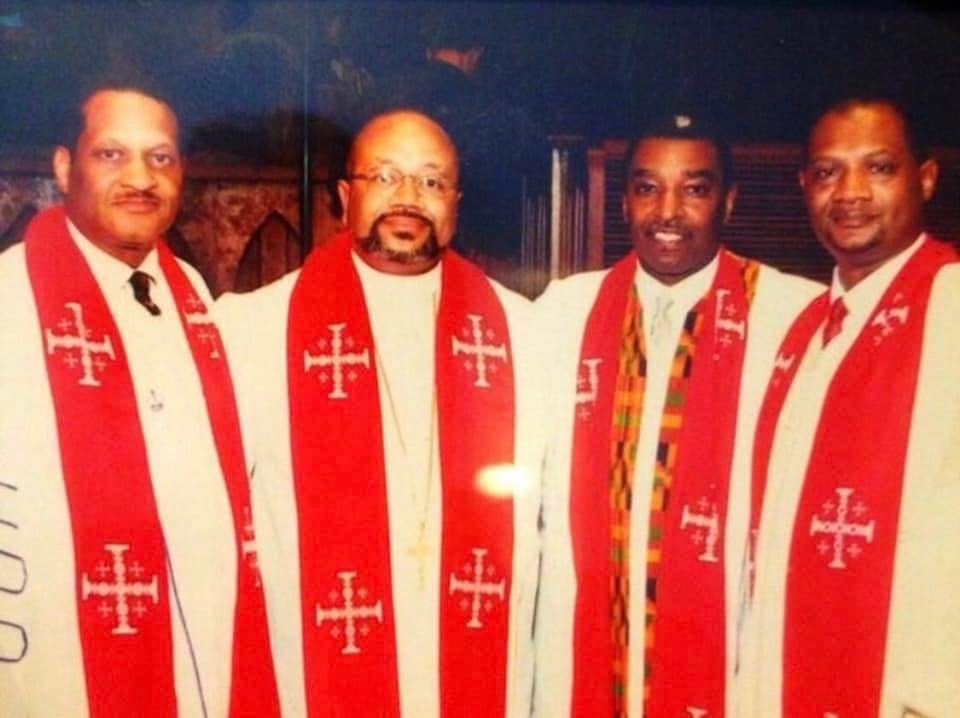
Dr. William Watley, Bishop Donald Hillard, Jr., me, the Late Bishop Reginald Jackson
This is a good read. I’m the opposite in that I’m very social. However, I found that I couldn’t cultivate strong friendships that were sustained. I can count on one hand those I truly believe were/are my friends and I’m really good with that.
Rev. Dr. Soaries, I was particularly moved by your recollection of those monthly lunches, especially knowing that one of the four friends is now gone. A fellow pastor who knew us during a particular season of ministry carries memories of our becoming that no title or anniversary celebration can preserve. Your experience with Dr. Proctor's cohort also raises a question for those of us still in active ministry: where are we creating opportunities for emerging pastors to wrestle with difficult questions together, free to be learners among people who understand the weight of their calling? Thank you for the candor with which you honor the friendships that sustained you and acknowledge the invitations you sometimes wish you had extended.